
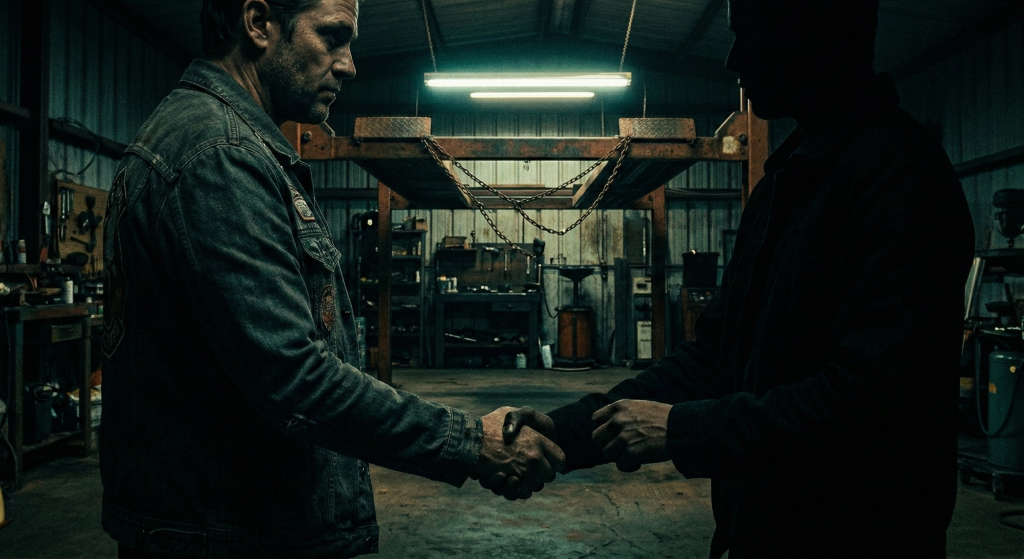
In the world of classic car restoration, deals are still done the old way: a handshake, a deposit, and faith. When that faith is betrayed, the wounds run deep.
Part I: The Man Who Couldn’t Say No
Richard Thomas Finley presented himself the way many restoration shop owners do — a greasy-handed craftsman with a reputation for breathing life back into old iron. His shop, Classic American Street Rods, sat along the flat coastal roads southeast of Houston, the kind of place where you would find a 1957 Bel Air taking shape under fluorescent lights while cicadas sang outside. Finley had a pitch that sounded almost too good: modern engines in vintage bodies. For owners of carbureted classics, it was a dream — keep the look, lose the maintenance headache. He would take a 1969 Camaro, pull out the tired small-block, and slot in something fuel-injected and reliable. The promise was seductive. The execution was fraudulent. Between 2018 and 2023, Finley took deposits from 72 customers. He gave them progress updates — photos, promises, timelines. But the work never came. Or it came and then stalled. Or parts were on order for months, then years. What customers did not know: Finley was stripping parts from their cars and selling them to other buyers. Some vehicles disappeared entirely.Part II: Numbers Do Not Lie
The Galveston County Auto Crimes Task Force began piecing together the pattern in 2023. By then, the complaints had stacked up like unpaid bills.- $498,000 — total stolen from 72 victims
- 28 victims — testified during a week-long jury trial
- 20+ vehicles — recovered and returned to their owners
- $495,678.65 — court-ordered restitution
Part III: The Verdict
On December 19, 2024, a jury found Finley guilty of felony theft exceeding $300,000. On January 6, 2026, Judge Jeth Jones sentenced him to 60 years in prison. Sixty years. In Texas, that sentencing signal matters. District Attorney Jack Pope stated plainly: this was not a business dispute; it was organized theft. The message was clear — the courts would not treat restoration fraud as a civil matter when the scale crossed certain thresholds. Finley has filed an appeal. The case may continue in the legal system for years.Part IV: The Trust Deficit
Here is what makes this case resonate beyond the headlines: it exposes the fragility of trust in a community that runs on it. Classic car restoration is still, in many ways, a handshake economy. You find a shop — often through word of mouth, not Yelp reviews. You talk engines and timelines over a coffee. You write a check, sometimes for tens of thousands of dollars, with nothing but a verbal promise and a handshake. There are no escrow services for a 1966 Mustang in progress. No app that verifies whether the new short block is actually sitting in your car engine bay, or whether it is a photograph from Google Images. Finley exploited that. He exploited the fact that enthusiasts want to believe in the craft, in the shared culture, in the idea that the person across from them loves cars as much as they do.Part V: What Remains
More than 20 cars were returned. Nearly half a million dollars in restitution was ordered. But the emotional toll is harder to measure. For the 72 victims, justice arrived late — in some cases, years late. Some lost cars that can never be replaced. Others lost money they may never see again, even with the court order. The restoration community, meanwhile, is left with a scar. Every future handshake now carries a little more weight. Every “trust me” now comes with a harder look. That is the real cost of what Finley did. Not just the money — though $498,000 is real money — but the trust he burned. In a world of escrow apps and blockchain verification, the classic car world still operates on something older and more fragile. And when that breaks, it does not just break between two people. It breaks a whole community.If the interesting part here is how trust becomes the whole mechanism, it also connects with the psychology of barn-find belief, the hotel Bible as invisible social infrastructure, and the Pirate Queen as a system that held together through reputation and force.